Related Posts with Thumbnails

Thursday, December 13, 2007

A Wand of Common Sense

John is learning that his position here means lots of meetings. Meetings and conference calls and briefings and power point, blah blah blah.

A couple of days ago he was in a meeting and someone brought up mentoring and asked for input on how to improve it. John suggested that you allow your people to make mistakes and encourage them to come to you when they've goofed so that you can develop a solution together and they can, you know, learn from it. Or something along those lines.

The response was blinks and crickets. (Did he really just say that out loud?)

The Air Force does not tolerate mistakes very well. In a service facing chronic shortages of many things, this is almost understandable. In many situations, you don't have the resources to recover from mistakes. But John was talking about giving someone something within their span of control, and from which you could all recover if some foibles occur along the way. He was saying he uses this to test and grow people, and it went over like a pork chop at a CAIR conference.

Its system of EPRs does not allow for an airman to be any less than perfect on paper: on a scale of 1 to 5, if anything other than a 5 is on your EPR it's the equivalent of a career-breaker. So, you have either Jesus working for you, or someone you'd like to show the door. There is no middle ground. With the meaning of these numbers taken away, raters are left with getting creative with the bullets: using just the right verbage; putting exclamation points just so. I shouldn't have to say how much of this "creativity" becomes outright falsehood; it's simply not realistic to think every airman has to be superman. Or wonder woman, for that matter. But having to make them all sound like that on an evaluation can be quite the writing exercise.

When no one is allowed to fail, or to even be mediocre, what motivation is there to excel? And you guessed it -- those young airmen who do want to excel, who are self-motivated and do want to improve their skills and be recognized for their efforts, they're looking around for a reason to do it. And from where they stand they're not seeing it.

Coupled with that is all the airmen the Air Force has steadily been booting out. This knee-jerk reaction they have as a "solution" for budget shortages. Some of these involuntary separations are airmen with over ten years in and working towards retirement: poof, all that time in and now they're starting over. Here's some money - now go figure out what to do with yourself. The promising new, young airmen who are looking around at this, what are they to think? I give my all and dedicate my career to serving my country ... only to get the boot at the halfway mark? No, thanks: I'll take control of my life now, thank you very much. And the ones with options -- the smart ones, the hard workers, the ones with education and wherewithal -- they are going to get out while the getting out is good. And they are getting out. That's all they talk about, when I get out, I can't wait to get out, I am sooo out of here as soon as my time is up.

And John will ask them, "Do you have a plan?" And many of them will blink and guffaw and insist it will all be better, even though they have no clue what it is they are going to do. But some of them do have a plan, and they're the ones the Air Force is going to be sorry they're losing. Especially when they realize about 5 years from now that -- surprise! -- they need a bunch of new people.

John has had many a bad day in his many days in the Air Force. He has even waxed nostalgic about his Army days when, maybe the BS factor was higher, but the backstabbing ratio was lower. But I always say, when anyone asks, that as his wife I am confident that he is a lifer -- unless they kick him out, that is. And you never know, really. Even though John of course is one of the "good" ones, that doesn't seem to matter to the number crunchers. They're just trying to save a buck; never mind they're shooting themselves in the foot in the process.

I often muse on what I would do if I could wave a Wand of Common Sense over the whole thing. If I could change just two things, I know exactly what they would be: I would get rid of the mentality that every airman walks on water come Eval time, and that anything less than a 5 on an EPR was a career killer.

And I would change the way they base next year's budget on what was spent this year. I don't know what the best solution is, but this Use It Or Lose It system they have now is completely asinine at a time when no one has money for what they need. But let's buy another $3,000 plasma TV we have no idea what to do with because if we don't, we won't have that $3,000 next year.

I can't even imagine how many millions or even billions of dollars could be saved if a government entity didn't have to look around at the end of their fiscal year and come up with ways to spend their remaining balance so that their budget wouldn't get axed the next year. Because this is not just an Air Force thing, but government-wide. They can't even carry the balance over into the next year. They have to use it now or not at all, and the presumption is that not spending it now means you won't need it next year, either. Can you imagine how much is wasted? How much frivolous spending that encourages? How much those dollars could be doing to effect change in our economy instead? Or even simply keep them from kicking out airmen that our country needs? (Because the need won't go away just because the airmen do. And what do you think costs more: retaining the airmen you have or training some new ones?)

But rather than rant on and on and making yet another gargantuan post even longer -- oh, wait, too late -- I am curious as to what you would do if you had a Wand of Common Sense of your own? What changes would you make?

** Author's note: I had John fact-check this, and he went ahead and added a little flavor of his own as well. Bet you can't tell where, can you?

Sunday, December 9, 2007

Say What?

*Author's Note: this post is all about my recent exploration into my son's speech delay, and learning new words like "apraxia", and I really drone on and on... So unless you are interested in these things, or you are familiar with how Sean-Peter "talks" and are curious about what the professionals say about it, or you just think Sean-Peter is so darn cute and you can't believe that there could be anything wrong with him . . . you might want to take a pass on this one. I won't hold it against you. Honest.

**To my family -- I don't think I have grandma's quote quite right at the end. Can someone tell me what they remember her saying?


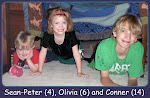
Sean-Peter's lack of speech is apparently more lacking than I had even realized. After meeting with an audiologist, a speech pathologist, and an ENT, it has been determined that Sean-Peter has ... a major speech delay! Okay, so that wasn't exactly a surprise, but I have been learning some things about my son along the way that have been illuminating for me, and portentous of a longer road of therapy ahead of us than I maybe realized.

The base doesn't do speech therapy, so we got a referral from TriCare to have a speech assessment done by a private company off-base called "Therapy Connection", where they were very insistent that I understand they have a year-long waiting list for children needing therapy. They said it so many times I got confused. "But we can be on the waiting list, right?" I mean, I understand there's a waiting list. But everytime I said that they kept telling me that there was a waiting list so I might want to look around for availability elsewhere, because they, you know, have a waiting list. Well, of course I'll be looking around for other care, but in the meantime can I get on the waiting list? You know, the one that I do understand you have?

Anyway, once they understood that I understood that there's a waiting list we were all good. It was like they were going above and beyond being all nice and concerned, and it just served to confuse me more. I'm accustomed to military healthcare: I don't do nice and concerned. And this place did seem very good, judging by the service they gave my son as well as by the reviews I got from other moms in the waiting room. And truly, seeing what some of the problems are that other children have out there, I have nothing to complain about.

Whenever the subject of my son's er, um, speech has come up, I have found it very difficult to accurately describe what it is he does. I have tried to explain that he is unintelligible because he swallows his words, or that the sounds he makes are gutteral; more often than not he doesn't even open his mouth and will "speak" entire paragraphs without moving his lips until he ends with a punctuated "Mahm!" Or, just as often, "Bap!", his all-purpose word.

But the pathologist who did his assessment helped me to understand that most of the sounds he makes actually get lost up in his nasal cavity, not down in his throat. She also confirmed that he can make many of the sounds a three-year-old should physically be able to make: he just doesn't put them together to form intelligible words. I went into this assessment with my son with terms like "articulation" and "phonological deficit" bouncing around my brain. However, by the end of the hour, it was clear that his speech is not even far enough along to "label" him with any of these terms. In short, his speech is not far enough along to determine what kind of speech problem he has.

Toward the end of our time with the pathologist, she was finally able to get a better look inside Sean-Peter's mouth to see that there weren't any apparent physical or structural issues. And with that possibility ruled out for now, she wondered aloud if he might have apraxia, a term I was not at all familiar with. She quickly explained that childhood apraxia of speech has to do with the connection between the brain and the mouth, and she gave the simple example of a TV and an outlet: both function fine, but the cord connecting the two isn't working. Or, as I googled it later, apraxia has to do with "speech motor planning and programming". Children with apraxia have "difficulties transmitting the speech message from their brain to their mouths". This would explain why Sean-Peter can make these sounds but has difficulty using them in words.

A couple of other descriptions of apraxia resonated with me while I was googling; one said that children with apraxia may not speak intelligibly, but they sure do have a lot to say! This is so true for SP: he will go on and on and on and on ... even gesturing and jabbing his finger at you, and it's obvious he's giving you the business, but you have no idea what he's saying. John and I have laughed many times because one day it's all going to become clear and we'll get a taste of how much smack-talk he's been dishing out without us knowing to curb it.

Another description that struck me talked about those moments when you're trying to get them to say a certain word, and you can see in their expression that they really are trying. But he opens his mouth and kind of moves things around and ends up not making any kind of sound at all. And you can see the confusion come over his face like what is it I'm supposed to be doing, anyway? and it really is so sad because you can tell that he really is trying but he just can't do it. It's at this point that I say "Good job!" or something just as inane, because I am loathe to see that expression of confusion turn into frustration.

Of course, these moments of cooperation aren't as common as the times I ask him to say something and he simply responds, "No!" That's one word he doesn't have any difficulty opening his mouth for.

Our appointment with the ENT specialist proved to be quite interesting as well, although I went in there really just to rule things out. You know, so I can tell people with confidence, Yes, his hearing is fine; yes, his ears are fine, no excess fluid; no, he doesn't have enlargened adenoids or anything growing on them. That last one really has come up. The things out there you can worry about, if you really wanted to worry about something. Sheesh.

Sometimes in the military healthcare system you get a doctor who really makes you forget that they have nothing to lose by treating you like everyone else in the system. John and I have wryly joked over the years that with military healthcare you sure do "get what you pay for". Ha-ha and all that. Occasionally you come across a military doctor that doesn't remind you that their uniform shields them from malpractice suits. They're usually the ones that care so much they seem completely burned out, or they're counting the days until they're getting out -- and they always have a plan.

This doctor was one of those -- one of the good ones getting out, that is. (And, yes, he does have a plan: Eau Clair, Wisconsin will soon be gaining a very capable ENT.) He really seemed to be interested in Sean-Peter's particular condition. It wasn't the first time I'd heard, "He really is doing something unusual there, isn't he?" But it was the first time I finally had it labeled: "Hyper Nasal Speech". And he explained that he sounds the way he does because his palet isn't touching the back of his throat when he "talks". But it is capable of touching the back of his throat, because he can make the hard "g" sound. He did examine inside his mouth to rule out any physical abnormalities ... and then he left the room to do some research. Maybe this isn't novel in the "real world", but it is in the one I live in. He also acted very concerned that SP won't be receiving the therapy he needs if there's a waiting list, and he put additional notes on his file in the computer for his primary care provider that should help us if we need to come back for another referral.

But hopefully it won't come to that, because I have been working the local school district as well for what therapy Sean-Peter will qualify for through the public system ; it's just taking longer to get that paperwork squared away and appointments scheduled. In the meantime, meeting with these professionals and focusing on what I am now learning is a real problem with Sean-Peter's speech has subtly changed how I am doing things at home. I really don't think I was ever treating him like he didn't want to talk. I mean, he's sharp as a whip and twice as ornery, but it's been pretty clear that he isn't doing the mumbo-jumbo speech thing on purpose. But I do have more compassion now and am simply paying more attention to every sound he is trying to make -- and he is gaining ground in opening his mouth for more and more words, even if those "words" are still unintelligible. That's still progress, in my book.

I'm also slowly reintroducing sign language -- something we stopped doing over a year ago, I don't remember why. And I'm trying to incorporate some word drills that the pathologist suggested to me as well as some simple things to work on at home that I picked up from my googling. So far as I can tell, it's too soon to "diagnose" him with apraxia, but it's as good a place to start as any. There are worse things to be wrong with my kid, that is for sure. When I look at my little family, I am downright amazed at how amazingly healthy they all are. And when I look at my extended family -- seven nephews and all -- I am downright dumbfounded. In reference to my sister's recent blog post, if talking too much is the worst thing we have to deal with in this family, I will thank my lucky stars.

Of course, it's not luck at all. As our grandma used to say, looking at a roomful of grandchildren, "Lord, bless these wonderful children." Thanks, grandma. It appears to be working.

Wednesday, December 5, 2007

Snow Day!

The kids were so excited this morning to find the snow that was promised to come while they slept.It started snowing sometime during the night, and continued into the afternoon. True to their word, the base did not close, and John got to commute to work with all the other crazy commuters who tried to avoid being one of the many hapless drivers who wound up in the ditch. He wasn't quite so enamored with the snow by the end of the day. Conner fared better and got the day off. Here he is getting some help starting a HUGE snowman.

He was trying to roll it from the front yard to the back. But his helpers quickly tired and abandoned him...

This little guy lasted outside a lot longer than I thought he would.

And Olivia finally got to make the snow angel she's been talking about ever since she heard that living in Ohio meant snow. Snow that sticks. She was just a little disappointed to learn that snow didn't automatically mean Christmas...

I even played Becky Home-Eckie and brewed up some real hot chocolate, which Conner enjoyed by the fire before he went out for another round, this time with some friends his own age who invited him to go sledding. We may not have mountains here, but this part of the country does have some pretty good hills. We experienced a little round of nostalgia when we thought about the last time he went sledding -- in the mountains by our home in Italy, which now seems like a world away.

Tuesday, December 4, 2007

snow and sos's

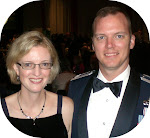
I am no longer an SOS widow! John officially finished yesterday -- a few days later than planned, but no matter. He is now a man of leisure ... until he starts a Master's program in January, but I say again -- no matter. As I write he is putting snow tires on his car, happy as a kid in a candy store in anticipation of the 2-3 inches of snow they are calling for tonight. That's my Southern boy. He's so cute.

He's also been forewarned that this base here is loathe to call a snow day unless it's a national emergency. Not that 2-3 inches is cause for a snow day. At least not in Ohio, I'm sure; though that would not be the case in many parts of this country where a few snowflakes would be enough to close down schools and make jack rabbits out of drivers with their brake pedals and send them skidding on imaginary ice into the ditch with only themselves to blame. I hate driving in Texas when it snows. The drivers are a more dangerous variable than the weather.

But speaking of SOS, I guess Sandra and Stephanie are the only ones who found the video in my previous post as hilarious as I did? Though Stephanie's email wasn't quite as enthusiastic as Sandra's comment -- at least, I don't think she scared her little girls with loud guffaws.

** Update **

Make that Melitsa, too!

Monday, December 3, 2007

Why you should learn English

This is so stinking funny, I don't care who you are. Once John and I picked ourselves up off the floor I thought of my amazing friend Stephanie, a German herself and speaker of many languages who is currently attempting to instill a working knowledge of English to a classroom full of Russians, among others.

This one's for you, Stephanie. I hope you found it to be as hysterical as we did!